Outpatient addiction treatment provides structured services while you continue living at home. This article explains what a typical weekly outpatient rehab schedule can include in New Jersey, how programs are matched to clinical need, and what to expect when you call for a confidential intake. Placement and medication decisions require assessment by a qualified clinician, this is general education, not individualized medical advice.
Table of Contents
ToggleWhat outpatient care means and who it fits
Outpatient care covers services delivered without overnight stays. It can range from once-weekly counseling to several hours of treatment multiple days per week, including intensive outpatient programs. The American Society of Addiction Medicine, widely used for placement decisions, recommends matching level of care to a multidimensional clinical assessment of medical, psychological, and social needs. (asam.org)
Common components available in outpatient settings
- Intake assessment and regular clinical reassessment using standardized tools. (nida.nih.gov)
- Individual counseling or psychotherapy (for example cognitive behavioral therapy or motivational interviewing). (nida.nih.gov)
- Group therapy and peer support groups focused on relapse prevention, skills, and mutual support. (samhsa.gov)
- Medication support when indicated, including office-based buprenorphine or referrals for methadone or extended release naltrexone for opioid use disorder. Evidence supports combining medications with counseling for better outcomes. (nida.nih.gov)
- Care coordination, case management, and help with housing, employment, or legal needs as part of a comprehensive plan. (asam.org)
Sample weekly schedules
Schedules vary by program intensity and clinical need. Below are three illustrative examples to show how sessions are commonly arranged.
Standard outpatient (low intensity)
- 1 intake evaluation, 45 to 60 minutes.
- One individual therapy session weekly, 45 to 60 minutes.
- One to two group sessions weekly, 60 to 90 minutes each.
- Medication check-ins as needed, often by appointment or telehealth.
Intensive outpatient program (IOP)
- 3 to 5 days per week, each day 3 to 4 hours of group and individual therapy combined.
- Medication management visits weekly or biweekly, when applicable.
- Case management and family sessions scheduled regularly.
Partial hospitalization program (PHP)
- Structured daytime programming 5 days per week, 4 to 6 hours per day, with more medical oversight than IOP.
- Typically used when greater daily support is needed but inpatient admission is not required.
| Level | Typical weekly hours | Who it may suit |
|---|---|---|
| Standard outpatient | 2 to 4 hours | Lower clinical acuity, stable housing, fewer withdrawal risks |
| Intensive outpatient (IOP) | 9 to 20 hours | Moderate severity, needs structured daily support while living at home |
| Partial hospitalization (PHP) | 20+ hours | Higher clinical needs who do not require inpatient admission |
These are examples, not fixed rules. Programs adapt schedules to each person and reassess as needs change. The ASAM Criteria provides a framework clinicians use to match people to the appropriate level of care. (asam.org)
Medication support and safety
When medication is appropriate, outpatient programs often coordinate medication-assisted treatment for opioid use disorder, alcohol use disorder, or other conditions. Clinical evidence supports combining medication with behavioral therapy to improve retention and reduce risk. Medication decisions require an individualized medical assessment and ongoing monitoring. (nida.nih.gov)
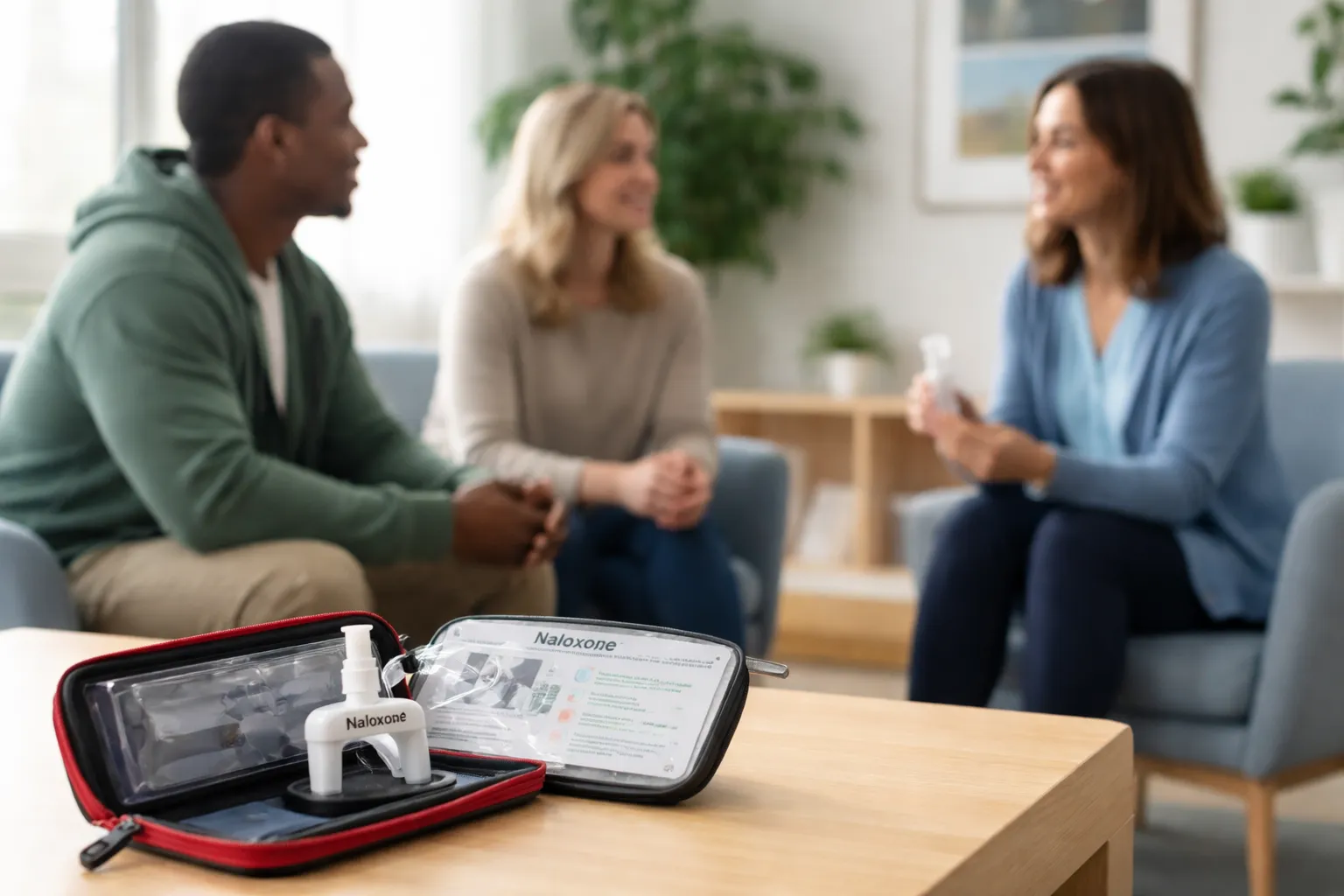
Programs should offer education on overdose prevention and access to naloxone where relevant. Naloxone is a lifesaving medication that can reverse an opioid overdose and is recommended as part of community overdose prevention efforts. Learn basic guidance from the CDC. (cdc.gov)
When outpatient care may not be safe
- Active severe withdrawal that requires 24 hour medical monitoring, seizures, or delirium. In these cases, medically supervised inpatient detoxification is appropriate. (nida.nih.gov)
- Severe uncontrolled psychiatric symptoms such as psychosis, acute suicidality, or severe medical instability. These require urgent or higher level care. (asam.org)
- Pregnancy or adolescents often need specialized programs with obstetric or pediatric collaboration. Ask for a program with those competencies. (nida.nih.gov)
How clinicians decide the right schedule
Decisions are based on a multidimensional assessment including withdrawal risk, co-occurring mental or physical health conditions, social supports, and safety concerns. The assessment guides whether standard outpatient, IOP, PHP, or inpatient care is most appropriate. Regular reassessment allows stepping up or down as the person progresses. (asam.org)
Practical tips for patients and families
- Ask for a written weekly schedule and the program’s contact plan for missed appointments, on-call coverage, and emergencies.
- Confirm whether medication management is offered on-site or by referral, and how prescription refills are handled.
- Check whether the program collaborates with primary care, psychiatry, and community supports like peer recovery specialists.
- Bring a list of current medications, medical conditions, and recent treatment history to intake.
- If you live in New Jersey, the state ReachNJ line can connect you to local services and referrals. (nj.gov)
If you or someone is having a medical emergency, call 911 right away. For suicide risk, mental health crisis, or if you need to talk immediately, call or text 988 any time, or use the 988 online chat. These crisis resources are national and available 24 7. (samhsa.gov)
Common questions
Will I need medication?
Not everyone will need medication. For opioid use disorder and some other conditions, medications are evidence based and often improve outcomes when combined with counseling. A clinician will review your medical history and recommend options if appropriate. (nida.nih.gov)
Can I work or attend school while in outpatient rehab?
Many people continue work or school while in outpatient care, particularly in standard outpatient programs. Intensive outpatient and partial hospitalization require more daily time and may need scheduling adjustments. Discuss options with the program to find a workable plan.
How long does outpatient treatment last?
Length varies by diagnosis, progress, and needs. Some people participate for a few weeks, others for many months. Programs use ongoing assessment to recommend continued care or step-down services. (asam.org)
Next steps and finding local care
If you are in New Jersey and want help locating appropriate outpatient services, ReachNJ provides a statewide call-in resource that can make referrals regardless of insurance or ability to pay. (nj.gov)
To learn about specific treatments offered by this provider, see our treatments page: Treatment options. For program locations, visit Locations. If you are ready to speak confidentially, contact our admissions team at Contact us to request an assessment.
Sources and further reading
- SAMHSA, Types of Treatment. For descriptions of outpatient, IOP, and other settings. (samhsa.gov)
- NIDA, Principles of Drug Addiction Treatment, 3rd Edition. Evidence base for combining medication and behavioral therapy. (nida.nih.gov)
- NIDA, Medication treatment for opioid use disorder. Guidance on integrating medications with counseling. (nida.nih.gov)
- CDC, Reversing an opioid overdose. Naloxone and overdose response information. (cdc.gov)
- New Jersey ReachNJ. State call line for SUD referrals and resources. (nj.gov)
- ASAM, About the ASAM Criteria. Framework for level of care and placement decisions. (asam.org)
If you would like help deciding whether outpatient care is appropriate, request a confidential assessment or speak with our admissions team. We can explain intake steps, scheduling options, and next practical steps without pressure.