Medications can be lifesaving for people with opioid use disorder. This article summarizes how buprenorphine, methadone, and naltrexone work, their typical clinical uses, and practical differences patients and families should know when asking providers about treatment. This is educational information only. Placement and medication decisions require assessment by a qualified clinician.
Table of Contents
ToggleWhy medications are used in opioid use disorder
Medication treatment for opioid use disorder reduces withdrawal symptoms and craving, improves engagement in care, and is associated with lower risk of overdose and death compared with no medication. These medications are most effective when combined with counseling and other supports. If you are experiencing a medical emergency call 911, and for a mental health or suicide crisis call or text 988 immediately. (cdc.gov)
Overview of the three FDA approved medications
Buprenorphine
What it is: Buprenorphine is a partial opioid agonist, which reduces opioid cravings and withdrawal without producing the same degree of respiratory depression as full agonists. Many formulations include naloxone to discourage injection misuse. Buprenorphine may be prescribed in office-based settings by clinicians authorized to treat OUD. (samhsa.gov)
Methadone
What it is: Methadone is a long-acting full opioid agonist used for maintenance therapy. When dispensed as medication for opioid use disorder, methadone is provided through federally certified opioid treatment programs, often called methadone clinics. Methadone is highly effective at reducing illicit opioid use and retaining people in care, but it must be delivered in a structured program with monitoring. (samhsa.gov)
Naltrexone (extended release)
What it is: Naltrexone is an opioid antagonist that blocks opioid effects. The extended release injectable form is given monthly and is non-addictive. Naltrexone requires that the person be fully withdrawn from opioids before starting, because starting it too early can trigger severe withdrawal. Initiation can be more difficult in some patients, but the monthly injection can suit people who want an opioid blocking approach. (dailymed.nlm.nih.gov)
| Feature | Buprenorphine | Methadone | Naltrexone (XR) |
|---|---|---|---|
| Mechanism | Partial opioid agonist | Full opioid agonist | Opioid antagonist, blocks effects |
| Where given | Office-based clinics, telehealth in some cases | Opioid treatment programs (OTPs) with daily/observed dosing | Clinic injection monthly, requires prior abstinence |
| Initiation challenge | Usually needs mild to moderate withdrawal for first dose to avoid precipitated withdrawal | No requirement to be fully withdrawn to start at OTP under clinical supervision | Must be opioid free for several days to weeks before first dose |
| Retention in treatment | Good retention; generally lower than methadone for some populations | Often highest retention of the three medications | Lower retention in some studies, but effective for selected patients who complete initiation |
| Overdose risk while retained | Reduced compared with no medication | Reduced compared with no medication | May reduce overdose risk once maintained, but initiation phase is higher risk if relapse occurs |
| Pregnancy | Safe alternative when started as part of care; combination products with naloxone are generally avoided in pregnancy per clinician guidance | Commonly recommended option in pregnancy when clinically appropriate | Limited safety data in pregnancy, decisions require individualized discussion |
Table sources: SAMHSA, CDC, FDA, NIDA, and state guidance. The relative performance on retention and initiation has been reported across multiple trials and reviews; methadone generally shows higher retention, buprenorphine has strong safety advantages for office initiation, and naltrexone requires an opioid free interval before starting. (samhsa.gov)
How do clinicians choose a medication?
Decisions consider the following factors: patient preference, pregnancy status, medical conditions, pattern of use (type and frequency of opioids used), previous treatment experience, risk of diversion or misuse, access to services like OTPs, and ability to tolerate an induction that requires being opioid free. Clinical guidelines recommend offering medication to anyone meeting criteria for opioid use disorder. (samhsa.gov)
- People who need frequent, intensive supervision or have not done well on office-based care may be directed to methadone at an OTP. (samhsa.gov)
- People who prefer office or primary care access, or who want home initiation with close follow up, often consider buprenorphine. (samhsa.gov)
- People who want an opioid blocker and can complete detox may consider extended release naltrexone. Clinicians should counsel that starting naltrexone is frequently harder than it appears. (dailymed.nlm.nih.gov)
Evidence highlights and common patient questions
Methadone and buprenorphine are consistently associated with reduced overdose and mortality when patients remain in treatment. Meta-analyses and clinical reviews support higher treatment retention with methadone compared with buprenorphine, and lower dropout when patients stay on medication. Naltrexone is effective for some people, but studies show it can be harder to start and retain patients compared with agonist therapies. (pubmed.ncbi.nlm.nih.gov)
Will medication ‘replace one addiction with another’
No. Opioid agonist medications stabilize brain chemistry, reduce illicit use, and lower overdose risk. These medications are evidence based treatments for a chronic medical condition and are not simply substituting one substance for another. Clinical teams monitor dosing, side effects, and progress as with other long term treatments. (samhsa.gov)
How long will I need medication?
There is no fixed time limit. Clinical guidelines do not specify a maximum duration for buprenorphine or methadone. Stopping medication should be a gradual, clinician-led process because stopping raises the risk of return to use and overdose. The best duration depends on individual benefit, risks, and goals. (cdc.gov)
Special situations to discuss with clinicians
- Pregnancy: Methadone and buprenorphine are commonly used in pregnancy to reduce opioid-related harms. Medication decisions in pregnancy require specialist obstetric and addiction care. (cdc.gov)
- Adolescents: Few medications are formally approved for young adolescents; treatment requires pediatric addiction expertise. (fda.gov)
- Severe withdrawal, seizures, psychosis, or overdose: seek urgent or emergency care. Call 911 for life threatening emergencies. (cdc.gov)
- Co-occurring mental health conditions: integrated treatment improves outcomes; ask about combined behavioral health services. (samhsa.gov)
Safety note: Detoxification alone without ongoing medication is linked to higher risk of returning to opioid use and overdose. If you or a loved one is thinking about stopping medication or leaving treatment, speak with your clinician first. For immediate danger call 911. For mental health or suicide crisis call or text 988. Keep naloxone accessible if there is any risk of opioid exposure. (cdc.gov)
How to find treatment in New Jersey
New Jersey maintains resources and referral services, including ReachNJ and a statewide treatment directory. Some state actions have expanded access to take home medication and integrated MOUD into more care settings. If you live in New Jersey contact ReachNJ or your county treatment director to find local options, including OTPs, office-based buprenorphine prescribers, and clinics that administer extended release naltrexone. (nj.gov)
If you are considering care at an outpatient provider, look for programs that offer medical assessment, medication management, counseling, and coordination with primary care. Our treatment pages describe services we provide and locations where we offer care: treatments, locations, and contact us for confidential help.
Frequently asked questions
Can I use naloxone while on these medications?
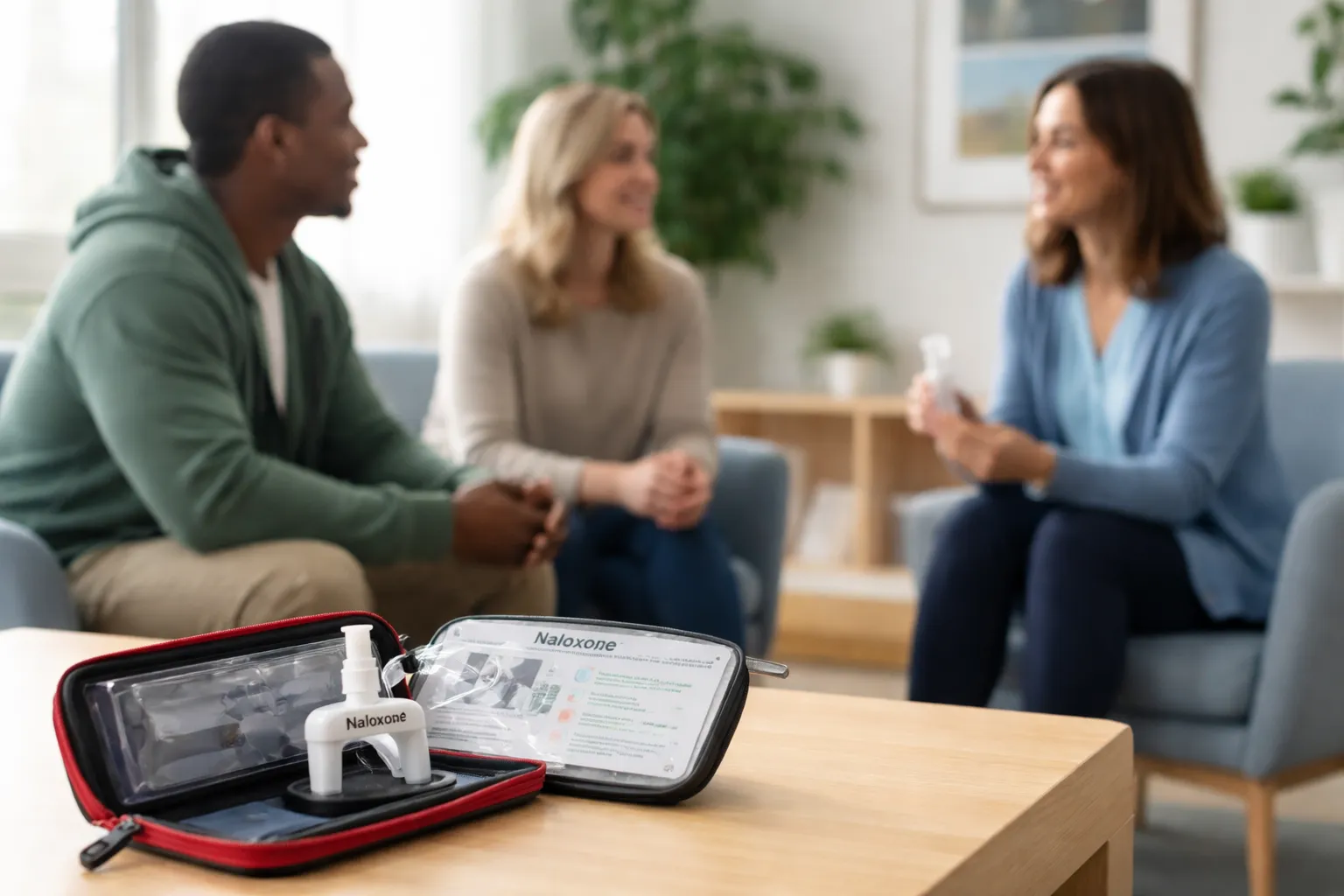
Yes. Carrying naloxone is recommended for anyone at risk of opioid overdose, including people on medication for opioid use disorder, because accidental exposure to opioids can still occur. Ask your provider where to obtain naloxone. (cdc.gov)
Will my insurance cover these medications?
Coverage varies by plan, state Medicaid rules, and pharmacy or clinic. New Jersey laws and policies aim to reduce prior authorization barriers, but coverage details should be confirmed with your insurer and treatment provider. Do not assume coverage without checking. (pub.njleg.state.nj.us)
Is one medication safer if fentanyl is involved?
All three medications can be used with fentanyl exposure, but fentanyl presents special induction and overdose risks. Buprenorphine induction may precipitate withdrawal if timing is not managed carefully, and methadone initiation is done in OTP settings with monitoring. Discuss fentanyl use openly with clinicians to choose the safest induction plan. (pmc.ncbi.nlm.nih.gov)
Next steps
This information is for general education, not individualized medical advice. Only a qualified clinician can assess medical history, pregnancy status, other medications, withdrawal risk, and personal goals to recommend a medication. If you or a loved one are ready to explore treatment, request a confidential assessment or speak with an admissions team to learn which medication and treatment plan fit your needs. You may begin by contacting a local treatment program, calling ReachNJ for New Jersey residents, or using the contact page on this site to request help. Request a confidential assessment.
Sources
- SAMHSA TIP 63, Medications for Opioid Use Disorder. (samhsa.gov)
- CDC: Treating Opioid Use Disorder. (cdc.gov)
- NIDA: Medications to Treat Opioid Use Disorder (fact sheet). (nida.nih.gov)
- JAMA comparative study: Buprenorphine Naloxone vs Methadone. (jamanetwork.com)
- FDA: Information about Medications for Opioid Use Disorder. (fda.gov)
- New Jersey ReachNJ and state resources for treatment. (nj.gov)