Short introduction: Naloxone is a safe, time sensitive medication that can reverse an opioid overdose when given promptly. This article, written for patients and families in New Jersey, explains who should carry naloxone, how to use it, where to obtain it in this state, and how naloxone fits with follow up care. This is general education and not individualized medical advice; placement and medication decisions require assessment by a qualified clinician.
Table of Contents
ToggleNaloxone education in New Jersey: basic facts
Naloxone, commonly known by brand names such as Narcan, is an opioid antidote that reverses life threatening breathing depression caused by opioids, including prescription medicines, heroin, and fentanyl. When given in time, naloxone can restore normal breathing and create an opportunity to get emergency care. Public health authorities and clinical guidelines recommend making naloxone available to people at risk of overdose and to their household members or other likely bystanders. (cdc.gov)
How naloxone works and forms
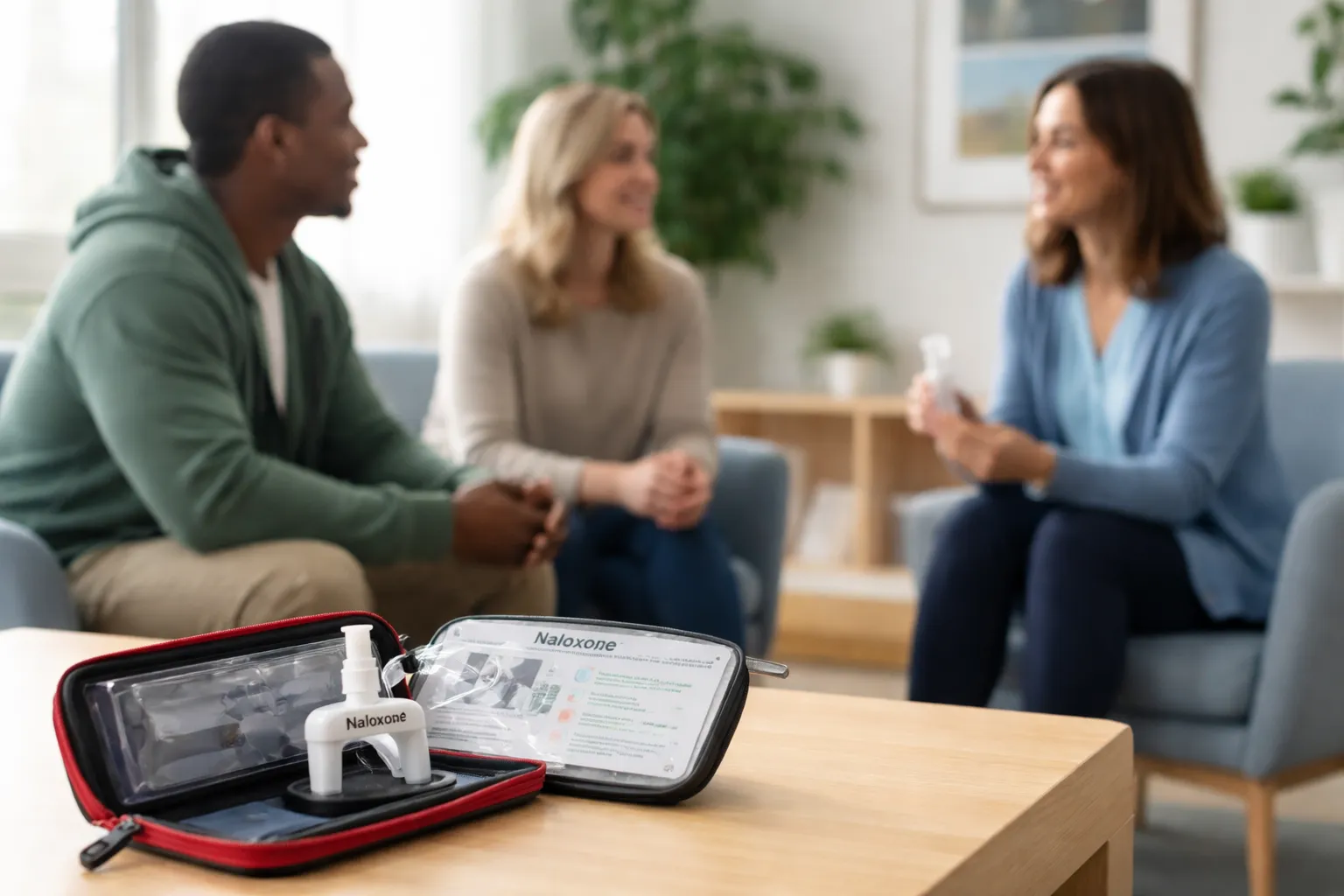
Naloxone blocks opioid receptors for a short time, reversing slowed breathing. It is available as an intranasal spray and as an injectable formulation. Newer naloxone products are widely available without a prescription nationwide after regulatory changes; state programs and federal agencies encourage broad distribution and training. Follow the manufacturer instructions and local training for step by step use. (fda.gov)
Who should carry naloxone
Carrying naloxone is recommended for many people and settings. The table below summarizes common situations when naloxone is appropriate to have on hand. This is education only; a clinician should assess individual risk and any medication interactions.
| Person or setting | Why carry naloxone | Action |
|---|---|---|
| People who use opioids, including prescription opioids | Direct risk of opioid overdose, especially with high dose or combined sedatives | Carry naloxone, learn use, tell household or friends where it is stored |
| People recently released from detox, incarceration, or substance use treatment | Tolerance drops during abstinence, raising overdose risk if opioid use resumes | Keep naloxone accessible and arrange follow up care including medications for opioid use disorder |
| Family members, roommates, partners, and close friends | Often nearest person when an overdose happens | Keep naloxone at home, know how to use it, and call 911 after administration |
| First responders, school nurses, community organizations | May encounter opioid overdoses in public or institutional settings | Carry kits, maintain training, and follow local standing orders for distribution |
| People prescribed high dose opioids or opioids plus benzodiazepines | Combination increases respiratory depression risk | Discuss risk with prescriber, obtain naloxone, and review safer use strategies |
Access in New Jersey: standing orders, leave behinds, and free distribution
New Jersey has state programs and standing orders that make naloxone widely accessible. Licensed pharmacists can dispense naloxone without an individual prescription under state standing orders, and the state supports distribution through health departments, first responders, and community programs. Emergency responders are authorized to leave naloxone kits with patients after an overdose in many programs designed to reduce repeat events. If you are unsure where to get naloxone in your county, your local health department or pharmacy can help. (nj.gov)
The New Jersey Department of Human Services and Department of Health provide training materials and blank standing orders that organizations can use to carry and distribute opioid antidotes. New Jersey laws have also expanded access to naloxone in schools and harm reduction settings. If cost or insurance is a concern, ask your pharmacist or a local program about free public distributions or state-funded supplies. (nj.gov)
Using naloxone: practical steps
Always call 911 for any suspected overdose. If naloxone is available, follow the product instructions and local training. Typical steps for intranasal spray include: 1) Call 911 and check for breathing, 2) Place the person on their back and give naloxone in one nostril per the device instructions, 3) Provide rescue breathing or chest compressions if trained, 4) Stay with the person and be prepared to give a second dose if there is no response after the time listed in the product instructions, and 5) Transfer care to EMS when they arrive. After naloxone works the person may become agitated or sleepy; they still need medical evaluation. (samhsa.gov)
Note: some opioids such as buprenorphine are partial agonists and may require repeat naloxone doses for reversal, according to product labeling. Clinicians should advise patients about expectations for naloxone effectiveness for specific medications. (dailymed.nlm.nih.gov)
When naloxone is not enough: follow up care
Naloxone reverses an overdose in the short term, but it is not a substitute for medical care or for treatment of opioid use disorder. After an overdose, connect the person with emergency services and a clinician experienced in addiction care as soon as possible. The Centers for Disease Control and Prevention and other clinical guidance recommend that clinicians offer medications for opioid use disorder rather than detox alone, because detoxification without ongoing medication increases the risk of overdose and death. A qualified clinician can discuss treatment options including buprenorphine, methadone, or naltrexone. (cdc.gov)
Special situations and high risk groups
- Pregnancy: manage opioid exposure and overdose risk with specialist obstetric and addiction clinicians; naloxone should be used in an overdose emergency, and pregnant people with opioid use disorder need coordinated care. When in doubt, seek urgent specialist care.
- Adolescents and minors: involve pediatric or adolescent addiction clinicians and guardians; schools in New Jersey may have standing orders for antidotes. (nj.gov)
- Severe withdrawal, seizures, psychosis, or ongoing medical instability: these require urgent emergency or specialist care, not only naloxone on hand.
How to get naloxone in New Jersey today
Where to look first: local pharmacies, county health departments, community harm reduction programs, and some hospital or EMS leave behind programs. Many pharmacies can dispense an opioid antidote under the statewide standing orders; the New Jersey Departments of Health and Human Services post links to training and distribution resources for providers and the public. If you need help finding a program, your clinician or local public health office can direct you. (nj.gov)
Frequently asked questions
Do I need a prescription for naloxone in New Jersey?
No, New Jersey supports standing orders and pharmacy dispensing so many people can access naloxone without an individual prescription. Contact your pharmacy or local health department for options and any free distribution events. (nj.gov)
Will naloxone harm someone who is not on opioids?
Naloxone is not harmful to people who have not taken opioids. If given to someone who is not opioid affected, they will generally experience no effect from the medication. However if the person has used opioids, naloxone will precipitate withdrawal symptoms which can be uncomfortable but are not life threatening; emergency care is still required. (samhsa.gov)
What should I do after giving naloxone?
Call 911, stay with the person, be prepared to give additional doses if needed, and provide rescue breathing or CPR if you are trained and the person is not breathing. After the immediate emergency is addressed, arrange follow up with a clinician for treatment options and overdose prevention planning. (accessdata.fda.gov)
Sources and further reading
- CDC: Reversing an opioid overdose, naloxone information. (cdc.gov)
- SAMHSA: Opioid overdose reversal medications and toolkit. (samhsa.gov)
- New Jersey Department of Health: Naloxone distribution and training. (nj.gov)
- NJ Department of Human Services: Naloxone distribution program and leave behinds. (nj.gov)
- FDA: Information about naloxone and nalmefene. (fda.gov)
- SAMHSA: 988 Suicide and Crisis Lifeline. (samhsa.gov)
Compassionate next steps
If you or a loved one is at risk of opioid overdose, consider asking your prescriber or pharmacist for naloxone and a brief training. If someone has recently left detox or incarceration, arrange a same day follow up with an addiction clinician and ask about medications for opioid use disorder. For help finding treatment or support, see our treatment options and locations pages or contact us to request assistance. Links: treatment options, locations, contact us.
Remember, this page is educational and not a substitute for professional medical assessment. If someone is unresponsive or not breathing call 911 now. For a mental health or suicide crisis, call or text 988 for immediate support. If you would like to request a confidential assessment or speak with an admissions team member about services, please contact us; the admissions staff can explain next steps and help arrange care without pressure.