Table of Contents
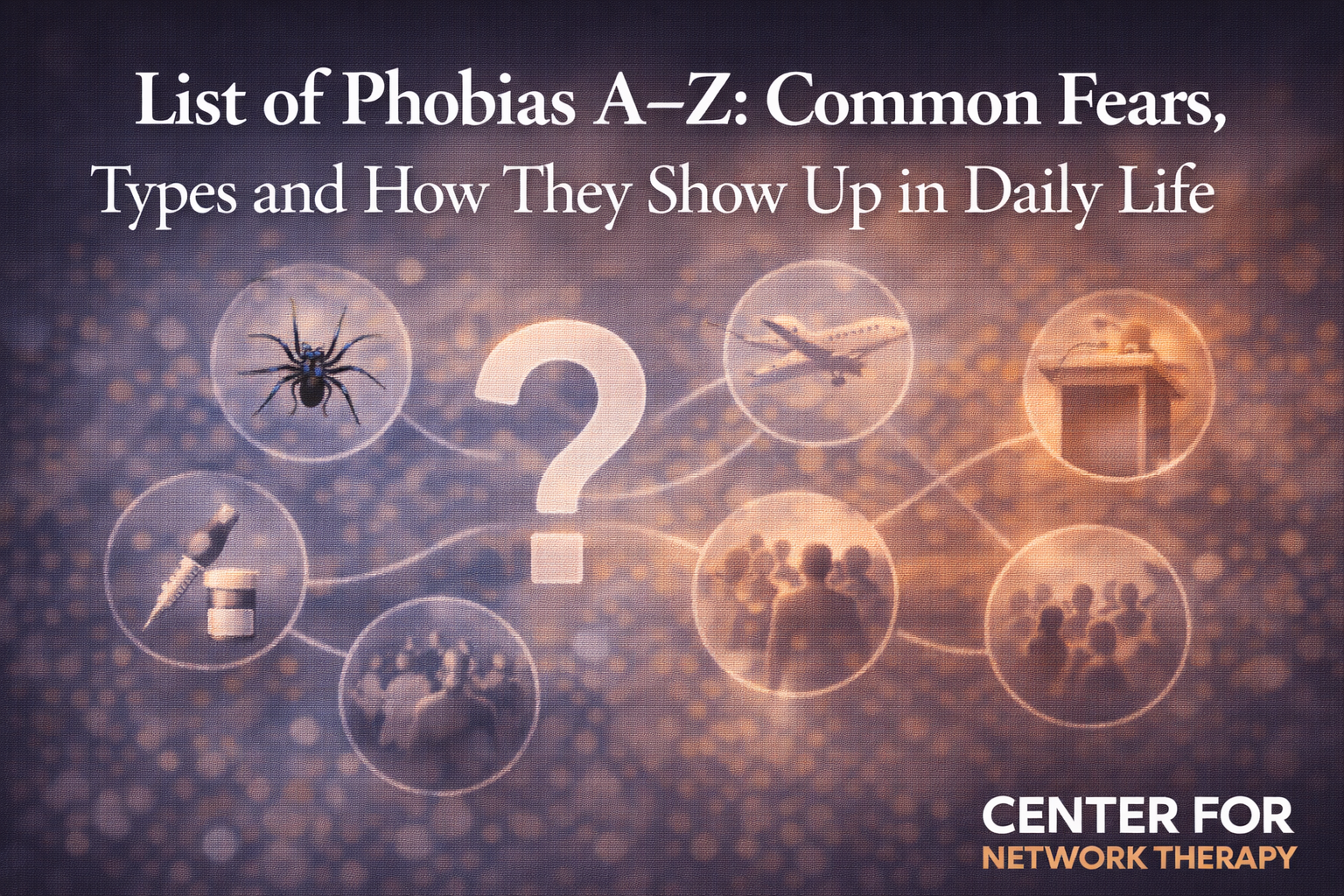
ToggleList of Phobias A–Z: Common Fears, Types and How They Show Up in Daily Life
Fear is part of being human. It helps you stay alert in risky situations. But sometimes fear goes beyond that. It becomes intense, persistent and hard to control. That’s where phobias come in.
A phobia is not just “being scared.” It’s a strong emotional and physical reaction to a specific trigger. That trigger could be an object, place, situation or even a thought. Many times, the actual danger is low, but the response feels overwhelming.
People with phobias often change their lives to avoid what they fear. Over time, this avoidance can shrink routines, limit movement and affect relationships.
You can read this in more depth here
What Exactly Is a Phobia?
A phobia is a type of anxiety condition where your mind and body react strongly to something specific.
You might notice:
-
A sudden rush of fear
-
Fast heartbeat or shortness of breath
-
Sweating or shaking
-
A strong urge to escape
Even thinking about the trigger can cause stress. That’s why many people avoid certain places or situations completely.
For example, someone with a fear of flying may skip trips. Someone with a fear of crowds may stop attending social events.
The Most Common Phobias People Experience
Some fears show up more often than others. These are the ones people talk about the most and also the ones that tend to affect daily life quickly.
-
Fear of spiders
-
Fear of snakes
-
Fear of heights
-
Fear of flying
-
Fear of dogs
-
Fear of thunder and storms
-
Fear of injections or needles
-
Fear of social situations
-
Fear of open or crowded spaces
-
Fear of germs
-
Fear of confined spaces
-
Fear of public speaking
Each of these can vary in intensity. One person may feel mild discomfort. Another may avoid entire situations because of it.
How Phobias Affect Daily Life
Phobias are not always loud or obvious. Sometimes they show up quietly through avoidance.
You might:
-
Take longer routes to avoid certain places
-
Cancel plans last minute
-
Rely on someone else to feel safe
-
Overthink situations before they happen
Over time, these patterns build up. Life starts to feel smaller.
The tricky part is that avoidance gives short-term relief. But it makes the fear stronger in the long run.
Major Types of Phobias
Phobias are often grouped into categories. This makes it easier to understand patterns.
1. Natural Environment
These relate to things found in nature.
Examples include:
-
Heights
-
Water
-
Storms
-
Darkness
People with these fears may avoid travel, outdoor activities or certain weather conditions.
2. Animal-Related Fears
These involve specific animals or insects.
Common ones include:
-
Dogs
-
Snakes
-
Spiders
-
Insects
These fears often start early in life, sometimes after a negative experience.
3. Situational Fears
These are tied to specific situations.
Examples include:
-
Flying
-
Driving
-
Being alone
-
Being in enclosed spaces
These can affect work, travel and independence.
4. Medical-Related Fears
These revolve around health and treatment.
Examples include:
-
Needles
-
Blood
-
Doctors
-
Medical procedures
These fears can lead people to delay or avoid necessary care.
A-Z List of Phobias (Snapshot)
There are hundreds of recognized phobias. Some are widely known. Others are rare.
Here are a few examples across the alphabet:
-
A: Fear of heights, fear of flying, fear of darkness
-
B: Fear of bacteria, fear of falling
-
C: Fear of confined spaces, fear of clowns
-
D: Fear of dentists, fear of disease
-
E: Fear of vomiting, fear of crowds
-
F: Fear of failure
-
G: Fear of public speaking
-
H: Fear of blood
-
I: Fear of insects
-
K: Fear of failure or rejection
-
M: Fear of germs
-
N: Fear of the dark
-
O: Fear of snakes
-
P: Fear of disease or contamination
-
S: Fear of social judgment
-
T: Fear of needles
-
Z: Fear of animals
Some names may sound unusual, but the experience behind them is real.
Why Do Phobias Develop?
There isn’t just one reason.
Most phobias come from a mix of:
-
Past experiences
-
Learned behavior from family or environment
-
Stressful or traumatic events
-
Brain sensitivity to fear responses
For some people, the cause is clear. For others, it builds slowly over time.
How People Start Managing Phobias?
The goal is not to “remove fear completely.” It’s to reduce how much control it has over your life.
People usually start with:
-
Understanding their triggers
-
Learning how their body reacts
-
Practicing calming techniques
-
Slowly facing the fear in safe steps
Support plays a big role. Many people find it easier to move forward when they are not doing it alone.
FAQs
How do I know if my fear is a phobia?
Ask yourself this:
-
Do you go out of your way to avoid it?
-
Does it affect your routine or decisions?
-
Do you feel intense physical symptoms?
If yes, it may be more than a normal fear.
Can phobias go away on their own?
Some fears reduce over time. But strong phobias often stay unless you actively work through them. Avoidance tends to keep them in place.
What is the most common phobia?
Fear of public speaking is one of the most common. Social anxiety and fear of heights also rank high.
Are phobias treatable?
Yes. Many people learn to manage and reduce their fears. The process is gradual, but it works with the right approach and support.
Can a phobia get worse over time?
Yes, especially if you keep avoiding the trigger. The less you face it, the stronger it can feel later.