Table of Contents
ToggleA Calmer Path Forward
Exploring Non-Addictive Anxiety Medications
Anxiety can begin quietly. Trouble sleeping. Racing thoughts. Avoiding situations that once felt manageable.
For some people, medication feels like a necessary next step. For others, it raises immediate concerns.
Will it be addictive?
Will I lose control?
What if I become dependent?
These questions are especially common among individuals in recovery or those with a history of substance use.
The good news is that several non-addictive anxiety medications are available today. Understanding how they work can help reduce fear and support informed decisions.
Why Many People Look for Non-Addictive Options
Certain anxiety medications, particularly benzodiazepines such as Xanax or Ativan, work quickly. They can also carry a risk of dependence when used long-term.
For individuals with a history of alcohol, opioid, or benzodiazepine misuse, this risk matters.
Non-addictive medications tend to work more gradually. Instead of immediate sedation, they aim to stabilize mood and reduce anxiety patterns over time.
For many, that slower approach feels safer and more sustainable.
Common Non-Addictive Anxiety Medications
SSRIs (Selective Serotonin Reuptake Inhibitors)
Often considered first-line treatment for anxiety disorders.
Examples include:
-
Sertraline
-
Escitalopram
-
Paroxetine
SSRIs regulate serotonin levels in the brain. They are not habit-forming and typically require several weeks to show full effect.
SNRIs (Serotonin-Norepinephrine Reuptake Inhibitors)
These affect both serotonin and norepinephrine.
Examples include:
-
Venlafaxine
-
Duloxetine
They are often used when SSRIs do not provide sufficient relief.
Buspirone
Buspirone is specifically approved for generalized anxiety.
It does not cause sedation and does not carry addiction risk.
It works best when taken consistently rather than for sudden anxiety spikes.
Hydroxyzine
An antihistamine with calming effects.
It may help short-term during acute anxiety episodes but is not intended as a primary long-term solution.
Beta-Blockers (such as Propranolol)
These medications help control physical symptoms like rapid heart rate or trembling.
They are often used for performance-related anxiety rather than generalized anxiety disorders.
Effectiveness and Expectations
Non-addictive medications can significantly reduce anxiety symptoms for many individuals. However:
• They take time
• Dosing adjustments are common
• Therapy often improves outcomes
Cognitive Behavioral Therapy is frequently paired with medication to support long-term stability.
When Anxiety and Substance Use Overlap
Anxiety and substance use frequently coexist. Some individuals begin using alcohol or other substances to manage anxiety symptoms. Others develop anxiety during recovery.
This overlap makes medication decisions more nuanced.
At the Center for Network Therapy, we regularly speak with individuals across New Jersey, including East Brunswick, Edison, Freehold, and West Orange, who are navigating both anxiety and substance-related concerns.
In some cases, stabilizing substance use through outpatient detox comes first. In others, anxiety treatment is part of the recovery plan from the beginning.
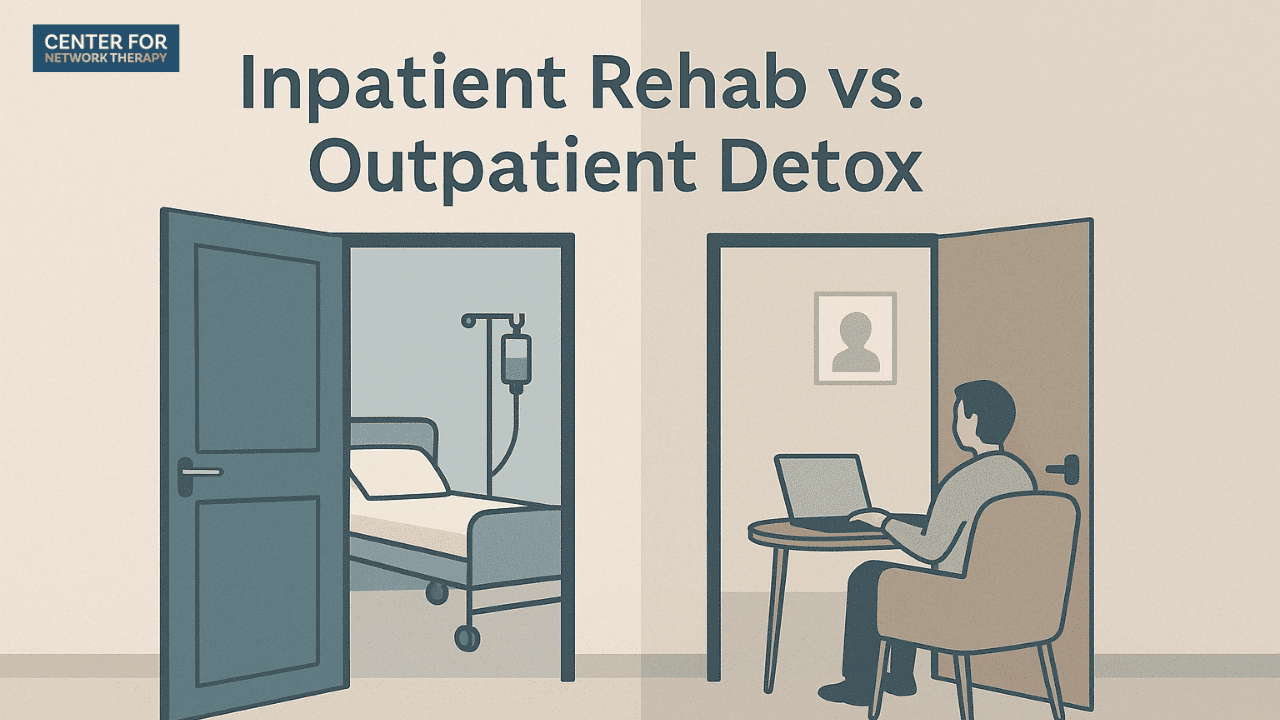
If you are unsure whether inpatient or outpatient care is appropriate, understanding the difference can help clarify options.
You can learn more here:
Understanding Inpatient Rehab
A Measured Path Forward
Choosing an anxiety medication is not about eliminating personality. It is about restoring stability.
If you are exploring anxiety treatment options in New Jersey and want to understand how they intersect with recovery, a medical conversation can help clarify what is appropriate.
We work with many insurance plans, including Horizon, Aetna, other private insurers, and Medicaid. Coverage questions are often the biggest barrier to starting care.
You can call 732-484-9661 to ask about outpatient detox, medication support considerations, and insurance coverage.
You may also take our confidential detox quiz to explore options privately.
FAQ
Are SSRIs addictive?
No. SSRIs are not habit-forming and do not produce a euphoric effect. They work gradually to regulate mood-related neurotransmitters.
Can someone in recovery take anxiety medication safely?
Yes, but medication choice matters. Non-addictive options are often preferred for individuals with a history of substance use. A medical evaluation helps determine the safest path.
What if anxiety gets worse when stopping benzodiazepines?
Rebound anxiety can occur when benzodiazepines are stopped abruptly. This is why tapering under medical supervision is recommended.
Does insurance cover anxiety-related outpatient care?
Many insurance plans, including Horizon, Aetna, other private insurers, and Medicaid, may cover outpatient detox and related medical services. Coverage varies and can be clarified before starting care.
If you are seeking help, Call 732-484-9661 to speak with a team member.
📍 You can also explore your options by taking the confidential Detox Quiz
📝 Professional guidance, personalized care.
Related Read:
Understanding Inpatient Rehab: Benefits, Challenges, and When Outpatient Detox is Better
Sources: