Table of Contents
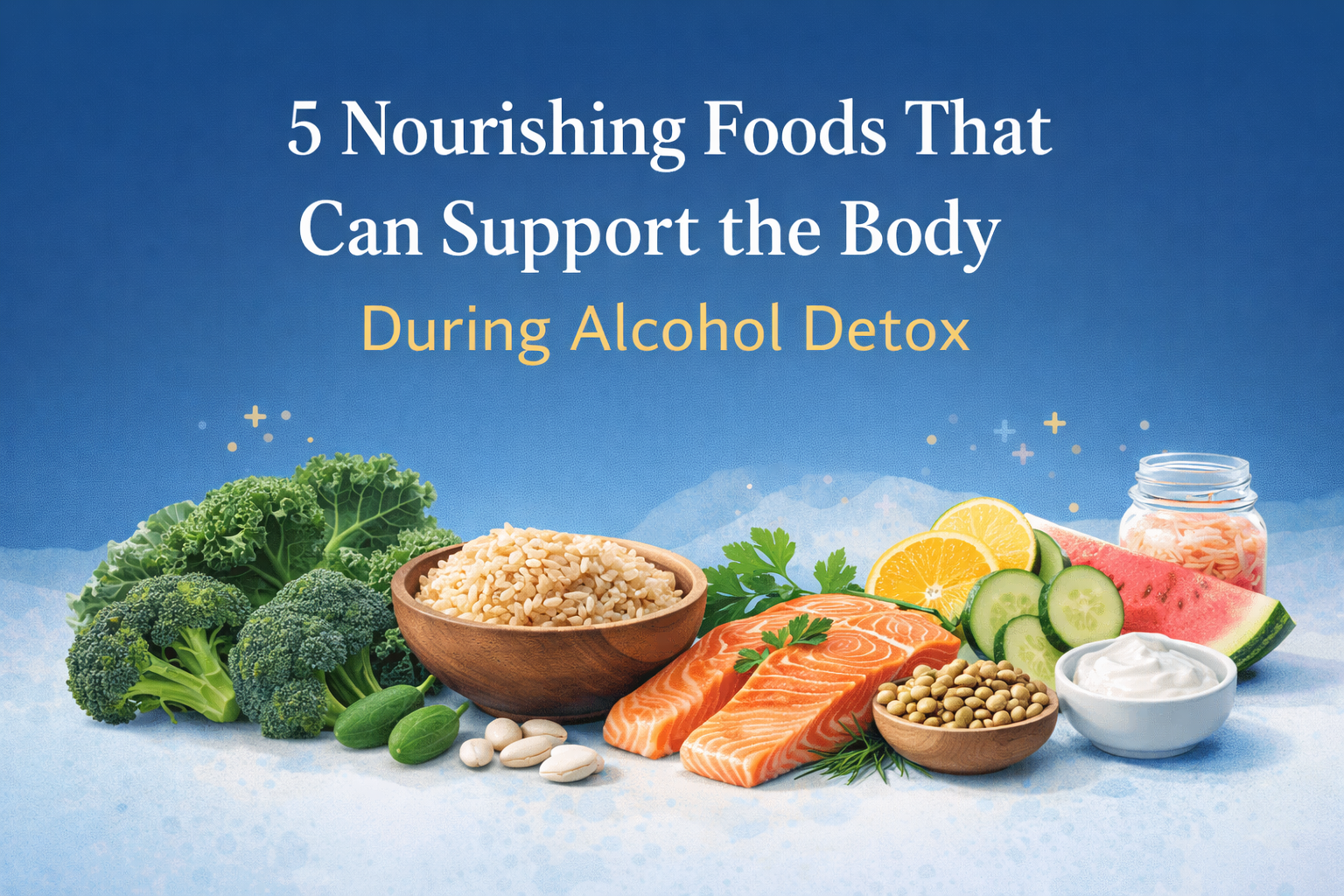
Toggle5 Nourishing Foods That Can Support the Body During Alcohol Detox
When people start looking up alcohol detox, it’s rarely casual curiosity.
Most are noticing changes in their body. Shakiness. Poor sleep. Anxiety. Fatigue. Digestive issues.
Nutrition cannot replace medical care, but it does play a role in supporting the body as it stabilizes. After prolonged alcohol use, nutrient stores are often depleted, blood sugar can fluctuate, and the nervous system may feel unsettled.
This guide focuses on foods that may help support the body during early alcohol detox, especially when paired with medical supervision.
1. Leafy Greens and Cruciferous Vegetables
Spinach, kale, broccoli, Brussels sprouts, and arugula are rich in folate, vitamin C, and fiber. These nutrients support liver function and help the body manage oxidative stress.
Many people in early alcohol recovery struggle with low energy and poor digestion. Introducing greens gently can support nutrient replenishment without overwhelming the system.
2. Whole Grains
Whole grains such as oats, brown rice, quinoa, and whole wheat bread provide steady energy and B vitamins. These vitamins are commonly depleted with alcohol use and are closely tied to mood regulation and nervous system health.
Stabilizing blood sugar can help reduce irritability, shakiness, and sudden energy crashes that often appear during early detox.
3. Lean Proteins
Protein supports tissue repair, immune health, and enzyme function. During alcohol detox, adequate protein intake helps the body begin restoring balance.
Eggs, beans, lentils, tofu, fish, and poultry are often easier to tolerate than heavy or processed foods and can help reduce fatigue and brain fog.
4. Hydrating Foods and Fluids
Alcohol is dehydrating, even when fluid intake seems normal. Rehydration is a key part of early detox support.
Foods with high water content such as cucumbers, oranges, watermelon, and soups can help restore hydration. Broths and electrolyte-containing fluids may also help reduce weakness and headaches.
5. Fermented Foods
Alcohol can disrupt gut health over time. Fermented foods like yogurt, kefir, kimchi, and sauerkraut contain probiotics that may help restore balance in the digestive system.
Improved gut health supports nutrient absorption and may ease bloating or digestive discomfort during early recovery.
A Grounded Reality Check
Food can support healing, but alcohol detox is not just a nutritional process. Withdrawal symptoms can escalate quickly and may become medically serious, especially for people with long-term or heavy use.
Many people begin searching for detox guidance when symptoms feel uncomfortable or concerning. That moment often signals the need for medical input, not just dietary changes.
At the Center for Network Therapy, we provide outpatient alcohol detox care that focuses on medical safety while allowing people to remain at home and connected to daily life.
We speak regularly with individuals and families across New Jersey, including East Brunswick, Edison, Freehold, and West Orange, who are looking for clarity before making decisions.
We work with many insurance plans, including Horizon, Aetna, other private providers, and Medicaid. Clear insurance coverage often removes the biggest barrier to starting care.
If you’re exploring alcohol detox options in New Jersey, a brief conversation with a medical professional can help you understand what level of support is appropriate.
📞 Call 732-484-9661 to ask about outpatient detox options and insurance coverage
📝 Or take our confidential detox quiz to explore next steps privately
Related Read
FAQ
Can food alone help with alcohol detox?
Food can support the body, but it cannot replace medical care during alcohol detox. Withdrawal symptoms such as tremors, anxiety, or elevated heart rate may require medical supervision to manage safely.
What are early signs that alcohol detox may need medical support?
Early signs include shakiness, sweating, anxiety, nausea, trouble sleeping, rapid heartbeat, or confusion. If symptoms feel uncomfortable or are worsening, medical guidance is important.
Is outpatient alcohol detox safe?
Outpatient detox can be appropriate for many individuals, especially those seeking early intervention or stabilization. A medical assessment helps determine whether outpatient care is safe based on drinking history, symptoms, and overall health.
Does insurance cover outpatient alcohol detox?
Many insurance plans do cover outpatient alcohol detox, including Horizon, Aetna, other private insurers, and Medicaid. Coverage details vary, which is why speaking with a care team early can help clarify options without commitment.