Table of Contents
ToggleHow Alcohol Affects Gallbladder Health: What You Should Know?
Most people think about the liver when they think about alcohol. Fewer think about the gallbladder.
The gallbladder plays a small but important role in digestion. Over time, heavy or prolonged alcohol use can affect digestive balance in ways that are not always obvious at first.
Understanding that connection can help you recognize early signs of stress before complications develop.
What the Gallbladder Actually Does?
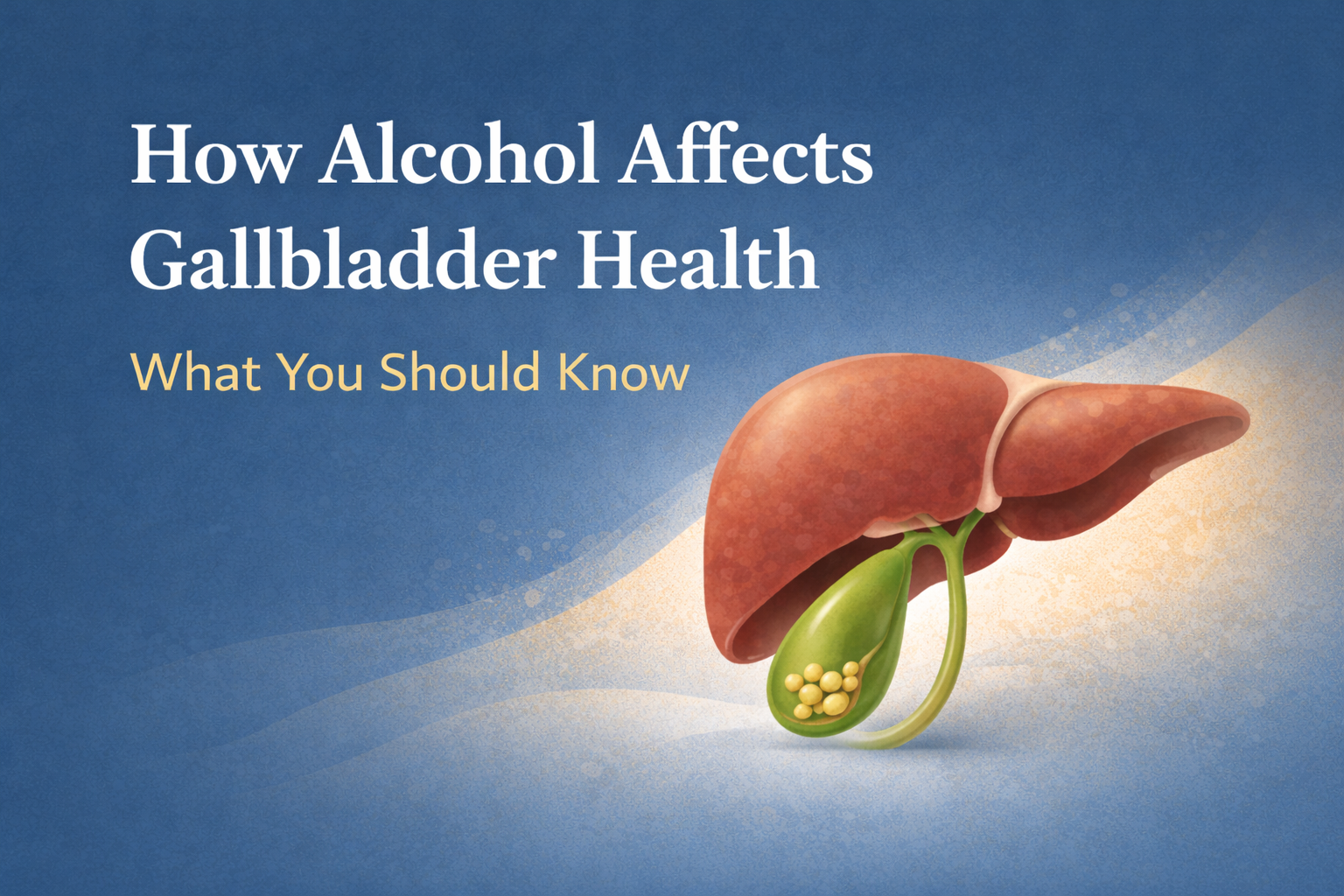
The gallbladder sits beneath the liver and stores bile, a digestive fluid that helps break down fats. When you eat, especially fatty foods, the gallbladder releases bile into the small intestine to support digestion.
When everything is working well, you don’t notice it.
When it’s not, symptoms can show up as abdominal discomfort, bloating, or pain after meals.
How Alcohol Influences Gallbladder Function?
Alcohol does not directly damage the gallbladder in the same way it affects the liver. However, long-term or heavy drinking can indirectly influence gallbladder health.
It may:
-
Contribute to inflammation in the digestive tract
-
Alter cholesterol levels in bile
-
Affect liver function, which in turn influences bile production
-
Disrupt normal digestive patterns
Over time, these changes can increase the likelihood of gallstones or gallbladder irritation.
Can Alcohol Cause Gallstones?
Gallstones form when bile becomes imbalanced, particularly when cholesterol levels rise relative to other components.
Alcohol is not considered a primary cause of gallstones. However, heavy drinking combined with poor diet, sedentary habits, or metabolic conditions may increase risk.
If gallstones develop, symptoms may include sharp pain in the upper right abdomen, nausea after eating, or digestive discomfort that worsens over time.
Gallbladder Removal and Alcohol Use
After gallbladder removal, bile flows directly from the liver into the intestine rather than being stored.
Some individuals tolerate alcohol normally after surgery. Others report increased digestive sensitivity, bloating, or diarrhea.
Because the digestive system adapts differently for each person, medical guidance is recommended before resuming regular alcohol use post-surgery.
Signs Your Digestive System May Be Under Strain
Symptoms that may suggest gallbladder or liver stress include:
-
Nausea or bloating after meals
-
Upper right abdominal pain
-
Persistent indigestion
-
Yellowing of the skin or eyes
-
Unexplained fatigue
While these symptoms do not automatically mean gallbladder disease, regular alcohol use can make underlying digestive issues worse.
Many people begin researching detox timelines when physical symptoms start to feel persistent. If you are wondering how long alcohol remains active in the body during withdrawal or stabilization, this guide may help:
How Long Does Alcohol Detox Take?
When Digestive Symptoms Connect to Alcohol Use
Digestive discomfort is often one of the first physical signals that alcohol use may be affecting overall health.
At the Center for Network Therapy, we regularly speak with individuals and families across New Jersey, including East Brunswick, Edison, Freehold, and West Orange, who initially reach out because of physical symptoms rather than addiction concerns.
Many conversations begin with questions like:
“Could this be related to my drinking?”
“Is detox necessary?”
“Can I stabilize without inpatient care?”
Our outpatient detox programs provide medical supervision for alcohol withdrawal while allowing individuals to remain at home and connected to work, family, and daily responsibilities.
We work with many insurance plans, including Horizon, Aetna, other private insurers, and Medicaid. Clarifying coverage early often removes hesitation and helps people make informed decisions.
A Thoughtful Path Forward
Digestive health is part of overall recovery.
Reducing or stopping alcohol use is not only about sobriety. It is often about restoring balance in the body, improving energy, stabilizing digestion, and preventing long-term complications.
If you are noticing ongoing digestive symptoms and suspect alcohol may be contributing, medical clarity can help you understand whether outpatient detox is appropriate.
You can call 732-484-9661 to ask questions about alcohol detox options and insurance coverage.
You may also take our confidential detox quiz to explore next steps privately.
FAQ
Can alcohol cause gallbladder inflammation?
Alcohol does not directly inflame the gallbladder in most cases, but heavy use can disrupt digestive balance and indirectly increase stress on the gallbladder and liver.
Does stopping alcohol improve gallbladder symptoms?
In many cases, reducing or eliminating alcohol can improve digestive symptoms over time, particularly if inflammation or bile imbalance is involved.
Is gallbladder pain a sign of alcohol withdrawal?
Gallbladder pain is not a typical withdrawal symptom. However, digestive discomfort may become more noticeable when alcohol use changes.
Is outpatient detox safe for alcohol-related health concerns?
Outpatient detox can be appropriate for many individuals, depending on medical history and withdrawal risk. A medical evaluation helps determine whether outpatient care is safe.
Moving Forward With Clarity
Digestive symptoms can feel frustrating and confusing. The goal is not alarm. It is understanding.
Alcohol affects more than mood or sleep. Over time, it influences digestion, metabolism, and organ health in subtle ways.
If alcohol use may be contributing to physical discomfort, early medical guidance can prevent larger complications.
Recovery does not have to mean stepping away from life. It can begin with a measured, medically supervised plan.